 airbrakecompressor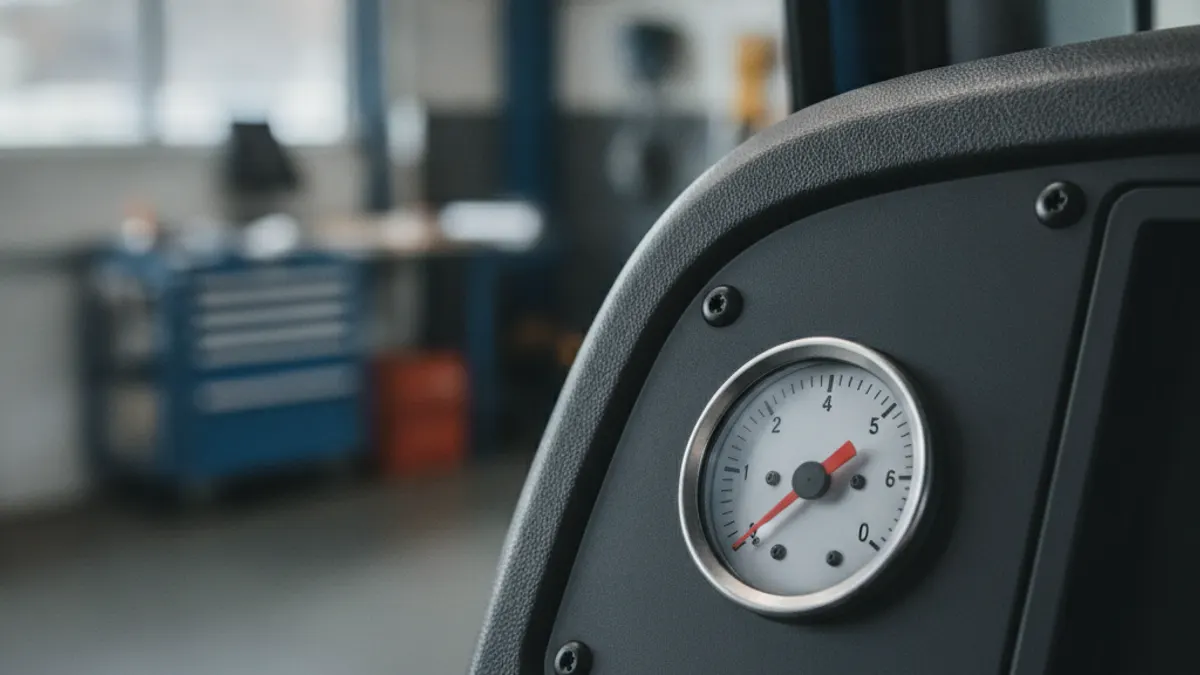
A fully charged heavy-vehicle air brake system typically reads about 120 psi at the dash gauges. The compressor governor stops pumping (cut-out) somewhere between 120 and 135 psi and starts it again (cut-in) around 100 to 110 psi, so a healthy system spends its day cycling in that band. If your primary and secondary needles both sit near 120 psi and hold steady, the system is charged and working as designed.
Those numbers are ranges, not a single magic figure, because the exact cut-out point is set by the governor and varies by chassis and manufacturer. What matters is that pressure builds to spec, holds, and recovers quickly after you use the brakes.
Key air brake pressure thresholds
Here are the pressure points every driver and technician should know, from a full charge down to where the truck stops itself.
| Condition | Typical pressure | What it means |
|---|---|---|
| Governor cut-out (fully charged) | ~120-135 psi | Compressor unloads; system is at working pressure |
| Normal operating range | ~100-120 psi | System cycles between cut-in and cut-out |
| Governor cut-in | ~100-110 psi | Compressor resumes pumping to rebuild pressure |
| Low-air warning | ~60 psi | Buzzer and dash light activate; do not drive |
| Spring (parking) brakes apply | ~20-45 psi | Emergency/parking brakes set automatically |
The governor sets the ceiling
The compressor runs continuously off the engine, but it does not pump against a full tank all the time. The compressor governor senses reservoir pressure and, at cut-out, sends air to the compressor's unloader to stop it from building more. As you apply the brakes and bleed air off, pressure drops until cut-in, and the compressor loads again. That roughly 20 psi swing between cut-in and cut-out is normal and is why the needles drift down and back up as you drive.
A governor cut-out below about 100 psi, or one that never reaches the low end of the normal range, points to a weak or worn compressor, a leaking unloader, or a governor out of adjustment. Understanding the full charging loop is easier once you know how air brake systems work as a whole.
Low-air warning at about 60 psi
Federal design standards require a low-air warning that activates at or below roughly 60 psi on a typical system. When that buzzer sounds and the dash light comes on, you have lost a meaningful chunk of your reserve. The correct response is to stop safely as soon as you can, not to push on hoping pressure recovers. Verifying that the warning trips near 60 psi and that the system builds and holds pressure is a core part of the CDL air brake inspection.
When do the spring brakes apply?
Heavy vehicles hold the parking and emergency brakes off with air pressure and apply them with heavy springs. As system pressure continues to fall past the warning point, the spring brakes begin to apply automatically, typically in the 20 to 45 psi range. This is a fail-safe: if the air system loses pressure completely, the springs bring the vehicle to a stop rather than leaving it with no brakes at all. It is also why you cannot release the parking brakes until you have built pressure back above that band.
Why the numbers are ranges, not one figure
Cut-out, cut-in, and warning points are set by the components fitted to a given truck, tractor, or trailer and by the manufacturer's specification. A vocational truck may be set differently from a highway tractor, and governors can drift over years of service. Always treat the vehicle's service manual as the authority for exact values, and use the ranges here to judge whether what you see is in the right ballpark. Every one of these thresholds depends on the same foundation of clean, dry, correctly regulated air, which is why the wider brake system components — compressor, governor, dryer, and valves — all have to be in good order for the gauge to read right.
What healthy pressure behavior looks like
Beyond the static full-charge number, watch how the system behaves:
- Build-up time. From about 85 to 100 psi, a dual system should build in 45 seconds or less at fast idle. Slow build points to a tired compressor or leaks.
- Balanced needles. On a dual air system, the primary and secondary gauges should read close to each other. A large split suggests a fault on one circuit.
- Leak-down rate. With the engine off, system fully charged, and the brakes released, air loss should stay under roughly 2 psi per minute on a straight truck and 3 psi on a combination. With the service brakes fully applied, the allowable rate rises to about 3 psi (straight) and 4 psi (combination) per minute. Anything beyond that means leaks that will drag pressure down in service.
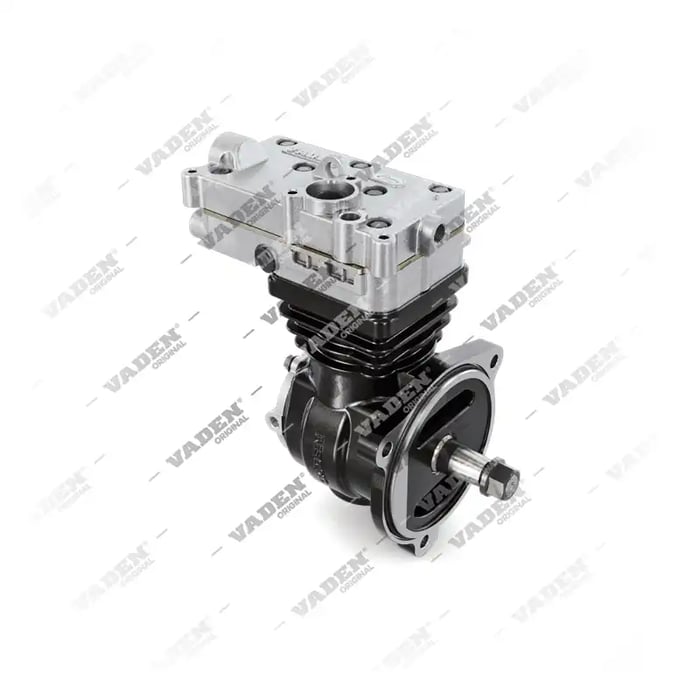
If the system will not reach a full charge, is slow to build, or drops off quickly, the compressor is a common culprit. A unit that can no longer pump to cut-out or that is passing oil usually needs a rebuild or a fresh, well-matched replacement compressor. Chasing leaks and confirming the governor setting first will tell you whether the compressor is really the weak link, or whether pressure is simply escaping faster than a healthy pump can replace it.
Need the part, not just the answer?
OE-grade air brake compressors and repair kits, manufactured and tested to commercial-vehicle standards.
Shop VADEN partsPublished by VADEN Original. Product links point to the manufacturer’s official catalogue. Specifications are general — always confirm figures against your vehicle’s service manual.