 airbrakecompressor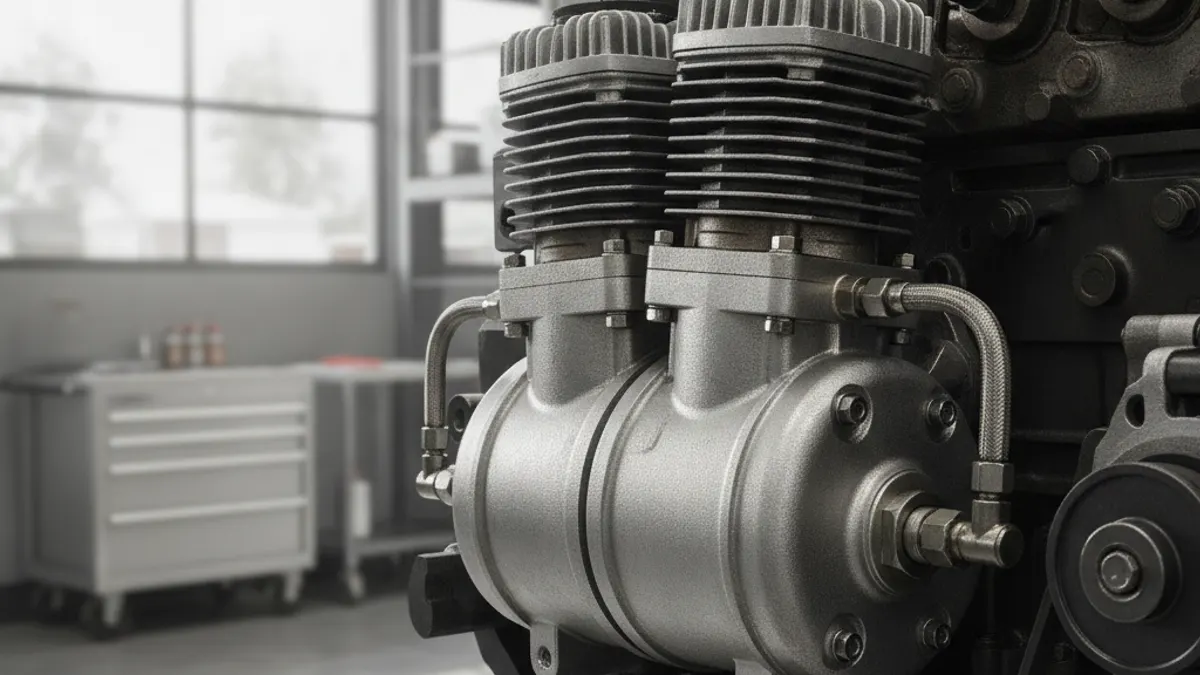
An air brake compressor is the engine-driven air pump that supplies compressed air to a commercial vehicle's brake system. It draws in air, compresses it, and pushes it into the reservoirs (air tanks) so the truck always has a stored charge — typically around 120 psi — ready to apply the service brakes, release the spring (parking) brakes, and feed the suspension and other air accessories. On a heavy truck, bus, or trailer, no compressor means no air, and no air means no brakes.
Unlike the hydraulic brakes on a car, air brakes are pneumatic: they use compressed air rather than brake fluid, and the compressor is what makes that air. Everything downstream — the foot valve, brake chambers, and slack adjusters — is just controlling and releasing the pressure the compressor built.
What an air brake compressor is
Mechanically, a truck air compressor is a small reciprocating piston pump, usually one or two cylinders, bolted to the engine and driven by gears, a belt, or the timing case. It shares the engine's oil and coolant supply for lubrication and cooling, which is why oil and coolant lines run to the compressor as well as air lines. As the engine turns, the pistons draw filtered air in on the down-stroke and force it out through a discharge line on the up-stroke.
Because it is tied to engine speed, the compressor is always turning while the engine runs. What changes is whether it is actually building pressure or idling in an "unloaded" state — and that is controlled by the governor and unloader, covered below.
Where the compressor sits in the air brake system
The compressor is the first link in the pneumatic chain. Air leaves it hot and wet, then passes through several components before it is safe to store and use. If you want the full picture of the circuit, see how air brake systems work; the short version of the path is:
- Compressor — builds pressure from atmospheric air.
- Air dryer — removes moisture and oil vapor so the tanks stay dry. The truck air dryer is what protects everything downstream from corrosion and freeze-ups.
- Supply (wet) reservoir — first tank the dried air reaches.
- Primary and secondary reservoirs — feed the two independent halves of a dual air brake system.
- Foot valve, brake chambers, spring brakes — where stored air is finally used to stop the truck.
How an air brake compressor works with the governor and unloader
The compressor does not run flat-out all the time — if it did, it would over-pressurize the system. Two parts manage it:
- The governor senses tank pressure and switches the compressor between "loaded" (pumping) and "unloaded" (idling) states. Learn more about the compressor governor and how it sets the pressure window.
- The unloader valve is what actually opens the intake so the compressor spins freely without building pressure once the governor signals "full." See the unloader valve for the detail.
The result is a continuous charge cycle between two set points:
| Pressure event | Typical value | What happens |
|---|---|---|
| Governor cut-out | ~120–135 psi | Tanks are full; governor unloads the compressor (it stops building pressure). |
| Governor cut-in | ~100–110 psi | Pressure has dropped from use; governor loads the compressor to pump again. |
| Fully charged system | ~120 psi | Normal running pressure with brakes released. |
| Low-air warning | ~60 psi | Buzzer and light warn the driver of a pressure problem. |
| Spring brakes apply | ~20–45 psi | Parking brakes apply automatically if pressure keeps falling — a fail-safe. |
Exact figures vary by vehicle and manufacturer, but the principle is universal: the compressor works in bursts to hold the system inside that window, not continuously.
Duty cycle: how hard should it run?
Air compressors are rated by duty cycle — the percentage of time they spend actually building pressure. A healthy system with a correctly sized compressor and no leaks pumps roughly 25% of the time or less. If your compressor is loaded much more than that, something is wrong: an air leak, a dragging or stuck-open unloader, undersized plumbing, or a tired compressor that no longer moves enough air per revolution. Chronic over-cycling overheats the compressor, cooks the discharge line, and is a leading cause of oil carry-over.
Single- vs twin-cylinder compressors
Compressors come as single-cylinder or twin-cylinder units. A single cylinder is simple and adequate for lighter or lower-demand vehicles; a twin-cylinder pump moves more air per revolution, recovers pressure faster, and runs cooler under heavy demand — common on tractors with big air suspensions and trailers. We compare them in detail in single vs twin-cylinder air compressor. Always match the replacement to the original specification for your engine and application.
Common signs of a failing air brake compressor
Because it runs every mile the engine does, the compressor is a wear item. Watch for these symptoms — a fuller diagnostic list is in air brake compressor symptoms:
| Symptom | Likely meaning |
|---|---|
| Slow pressure build-up / takes too long to reach cut-out | Worn rings or valves, or the compressor is losing capacity. |
| Compressor runs (loaded) almost constantly | Air leak, stuck unloader, or worn compressor. |
| Oil in the air lines, tanks, or air dryer | Worn piston rings passing oil into the discharge — often overheating-related. |
| Knocking or rattling from the compressor | Worn bearings, rod, or crankshaft; can precede failure. |
| Excessive water or oil at tank drains | Air dryer saturated and/or compressor pushing contaminants through. |
Two of these deserve their own attention: if the compressor is pumping oil into the air system, the contamination spreads downstream, and if the system is losing pressure faster than the compressor can replace it, the cause is often a leak rather than the pump itself. Diagnose before you condemn the compressor.
Replacement basics
When a compressor is genuinely worn — low output, oil carry-over, or noise — replacement is usually the right call, and it is worth doing properly. Minor wear (valve plate, gaskets, rings) can sometimes be addressed with a compressor rebuild, but heavy scoring or bearing damage means a new unit. When you replace, fit a quality replacement air brake compressor matched to your engine, and change the air dryer cartridge at the same time — a compressor that has been passing oil will have contaminated the desiccant. Inspect the discharge line and governor while you are in there, since they share the same working conditions. If you are sourcing related parts, VADEN's full brake system range covers the surrounding components too.
A few rules of thumb make replacements last:
- Use OE-grade parts. A cheap compressor that fails again in a year is no bargain when a roadside air loss puts the spring brakes on.
- Drain the tanks and check for leaks before blaming the compressor.
- Keep the air dryer serviced — most "compressor" oil problems start with a saturated dryer and an over-worked pump.
- Match single vs twin-cylinder and the correct mounting/drive to the original.
Looked after this way, a truck air compressor is a long-life component. Understand its place in the system, keep the duty cycle low, and it will quietly supply air for hundreds of thousands of miles.
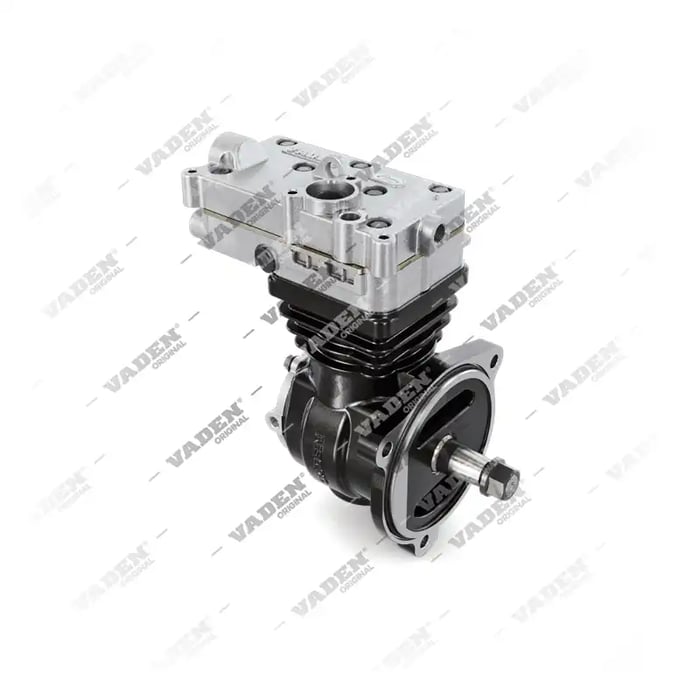
Need the part, not just the answer?
OE-grade air brake compressors and repair kits, manufactured and tested to commercial-vehicle standards.
Shop VADEN partsPublished by VADEN Original. Product links point to the manufacturer’s official catalogue. Specifications are general — always confirm figures against your vehicle’s service manual.