 airbrakecompressor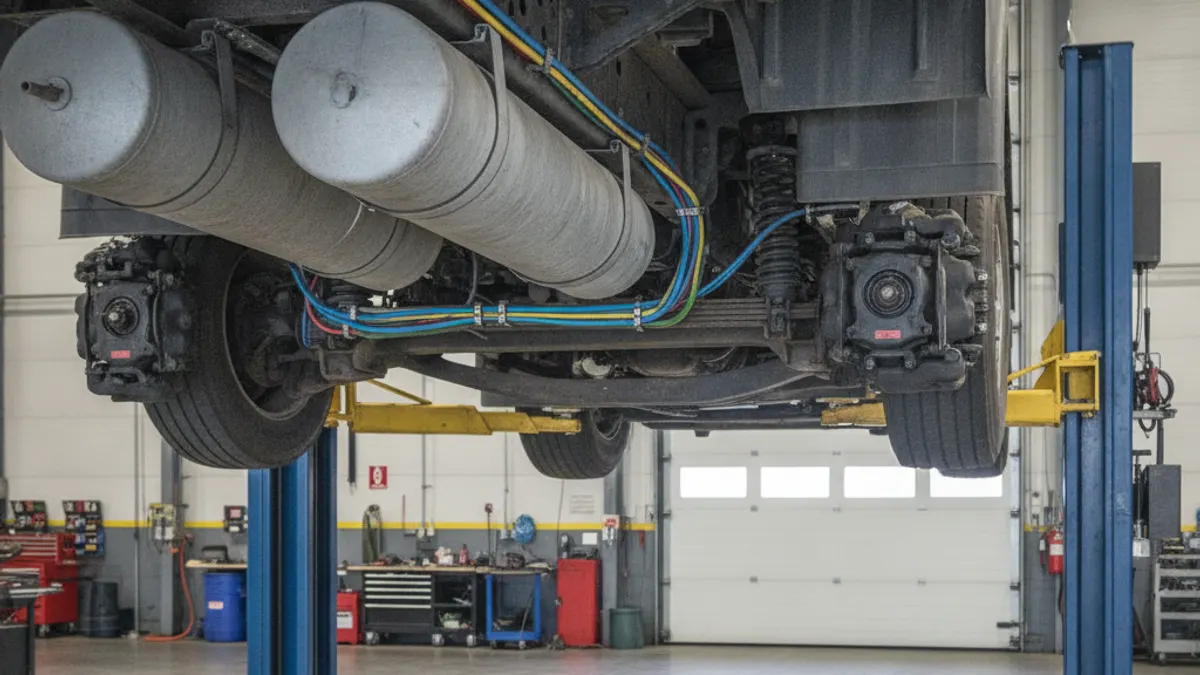
A truck air brake system uses compressed air — not hydraulic fluid — to apply the brakes. An engine-driven compressor charges a set of reservoirs to around 120 psi, and when you press the foot (treadle) valve, that stored air travels through relay and quick-release valves to the brake chambers at each wheel. The chambers push the S-cam or disc caliper, which clamps the brakes; release the pedal and the air exhausts, freeing the wheels. That is the whole idea in one breath — the rest of this page walks each part in order.
Why air instead of hydraulic fluid?
Cars use hydraulic brakes because they are light and precise. Heavy trucks, buses, and trailers use air for three practical reasons. First, air is free and self-replenishing — you can never "run out" the way a leaking hydraulic system runs dry. Second, air can be piped easily between a tractor and any trailer through simple glad-hand couplers. Third, and most important, air brakes are built to fail safe: the same stored air that lets you stop also holds the parking brakes released, so a serious leak makes the truck stop rather than roll.
Because it is pneumatic, an air brake system does not get "bled" like a car. Instead you drain water from the tanks and manage moisture with an air dryer. Confusing the two is the single most common mistake technicians new to heavy vehicles make.
The air brake system, part by part
Follow the air from where it is made to where it does work:
| Component | What it does |
|---|---|
| Air compressor | Engine-driven pump that produces compressed air and feeds the system. The heart of the whole circuit. |
| Governor | Tells the compressor when to load and unload, holding system pressure in a set band (cut-out ~120–135 psi, cut-in ~100–110 psi). |
| Air dryer | Removes moisture and oil from the air before it reaches the tanks, protecting valves from corrosion and freeze-up. |
| Reservoirs (tanks) | Store a large reserve of compressed air. Usually a supply tank plus separate primary and secondary tanks. |
| Foot / treadle valve | The brake pedal. It meters stored air in proportion to how hard you press. |
| Relay & quick-release valves | Speed up application and release by supplying and dumping air locally, close to the chambers, instead of routing it all the way back to the pedal. |
| Brake chambers | Convert air pressure into mechanical push-rod force at each wheel. |
| Slack adjusters + S-cam or disc | The push-rod turns the slack adjuster, which rotates the S-cam (or drives a caliper) to force the shoes or pads against the drum/rotor. |
1. Making and storing the air
The air brake compressor is bolted to and driven by the engine, and it pumps continuously. The governor watches tank pressure: when the system reaches cut-out, it signals the compressor's unloader to stop pumping air into the tanks; when pressure falls to cut-in, it loads the compressor again. Between the compressor and the tanks, the air dryer strips out the water vapor that would otherwise pool in the reservoirs and freeze brake valves in cold weather. Compressors and their governors are wear items — if pressure is slow to build or the system cycles constantly, that is where you start looking. OE-grade replacements live in VADEN's air brake compressor range.
2. Metering the air to the wheels
Pressing the treadle valve opens a path from the reservoirs to the brake chambers. Instead of sending all that air the length of the truck and back, relay valves mounted near the axles take a small "command" signal from the pedal and open a large local port from a nearby tank — so the rear brakes apply almost as fast as the front. Quick-release valves do the opposite on release, dumping chamber air to atmosphere right at the axle so the brakes let go promptly. This is why you hear a sharp hiss of air when a truck brakes and releases.
3. Turning air into clamping force
At each wheel, the brake chamber is a sealed housing with a rubber diaphragm and a push rod. Incoming air pushes the diaphragm, the rod extends, and it rotates the slack adjuster on the end of the camshaft. On a drum brake that camshaft turns an S-cam, spreading the brake shoes against the drum; on an air disc brake the same air force drives a caliper against a rotor. Slack adjusters set how far the rod has to travel — too much travel (out of adjustment) is a leading cause of failed brake inspections.
Service brakes vs. parking/emergency (spring) brakes
This is the part that surprises people. A heavy vehicle actually has two braking functions built into many of the rear chambers:
- Service brakes — applied by air pressure when you press the pedal. More pedal, more air, more braking. This is your normal, everyday brake.
- Parking / emergency brakes — held OFF by air pressure against a heavy internal spring. To park, you pull a dash valve that exhausts air from that spring section, and the spring mechanically applies the brake. Because they are spring-applied, they also set automatically if system pressure drops too far — typically somewhere around 20–45 psi.
That inversion is the safety heart of the whole design: the truck's default resting state is "brakes on." Air is what keeps them released.
Fail-safe and split-circuit design
Modern trucks use a dual air brake system — two independent circuits (primary and secondary) fed from separate tanks. If one circuit springs a leak, the other still stops the vehicle. A low-air warning (buzzer and light) triggers around 60 psi to alert the driver well before the spring brakes drop. Combined with the automatic spring-brake application, the layers mean no single failure leaves a driver with nothing.
Typical operating pressures
| Condition | Approximate pressure |
|---|---|
| Fully charged system | ~120 psi |
| Governor cut-out (compressor unloads) | ~120–135 psi |
| Governor cut-in (compressor loads) | ~100–110 psi |
| Low-air warning activates | ~60 psi |
| Spring (parking) brakes apply automatically | ~20–45 psi |
Exact figures vary by manufacturer and vehicle, so always defer to the spec plate and service manual for your unit.
Keeping the system healthy
An air brake system rewards simple maintenance: drain the tanks regularly, service the air dryer cartridge on schedule, keep slack adjusters in spec, and watch build-up and leak-down times. When a core part wears out, replace it with the correct OE-grade component rather than a mismatched substitute — the pressures and duty cycles here are unforgiving. You can source genuine air brake system components across compressors, valves, and repair kits from VADEN Original. Understanding how the pieces fit together, as above, is what lets you diagnose confidently instead of guessing.
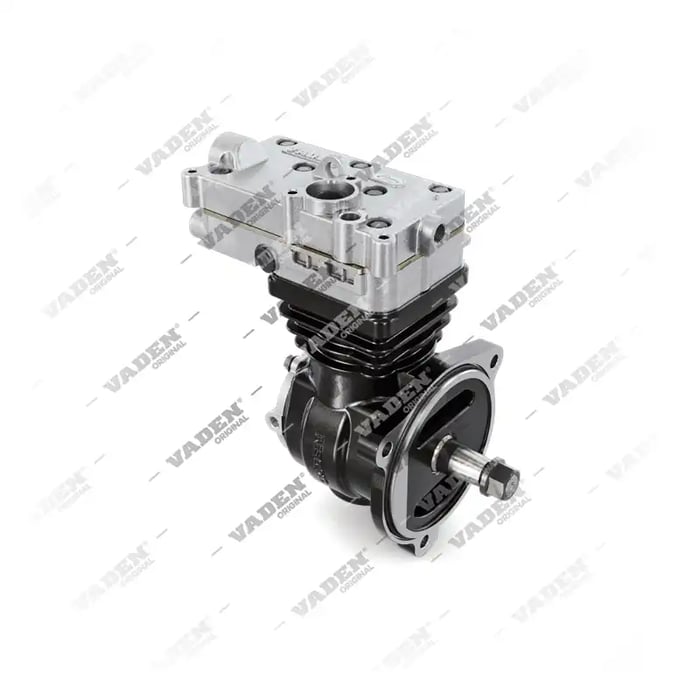
Need the part, not just the answer?
OE-grade air brake compressors and repair kits, manufactured and tested to commercial-vehicle standards.
Shop VADEN partsPublished by VADEN Original. Product links point to the manufacturer’s official catalogue. Specifications are general — always confirm figures against your vehicle’s service manual.