 airbrakecompressor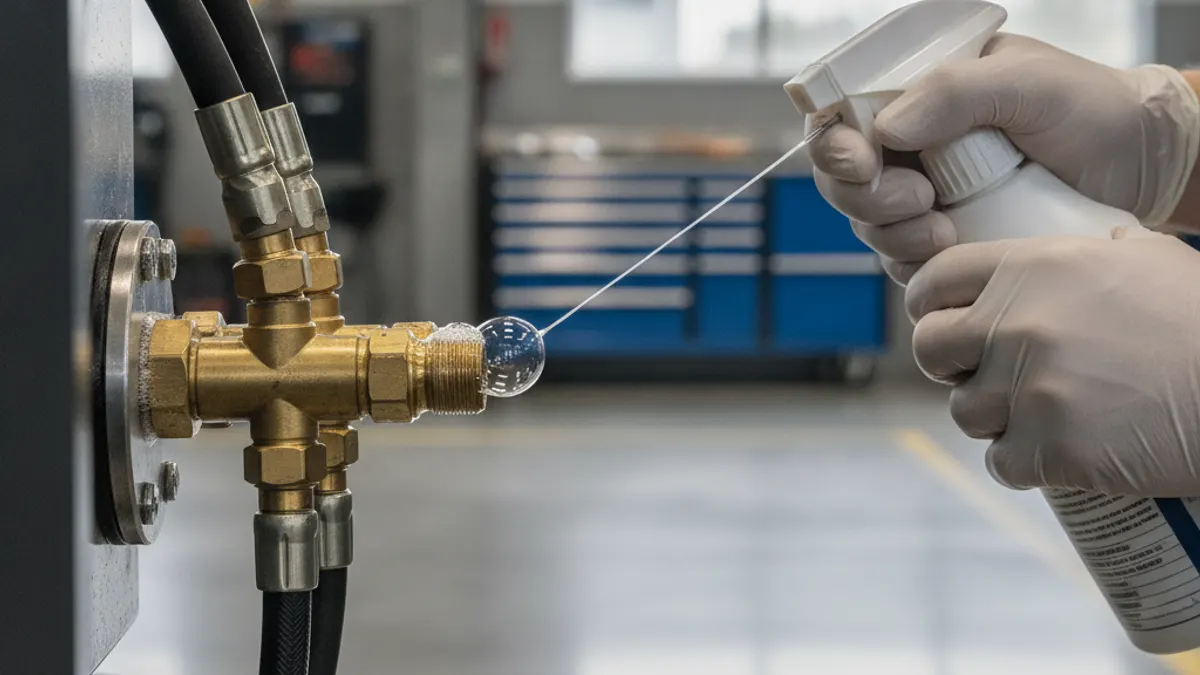
If your air brake system is losing pressure, it has a leak — pure and simple. A properly sealed system holds air: park on level ground, chock the wheels, charge the tanks to governor cut-out (roughly 120–135 psi), shut the engine off, and the gauge should barely move. When the needle drops steadily instead, air is escaping somewhere between the compressor and the brake chambers. The job is to figure out whether the loss happens all the time (a static leak) or only when you press the pedal (an applied leak), measure how fast it drops, and then track it to the exact fitting or valve.
Static vs. applied leak-down: two different tests
Air can leak from two states, and each points at a different set of parts. Testing both is how you narrow the search fast.
- Static (holding) leak — air escapes with the service brakes released. The leak is somewhere in the supply and delivery plumbing that is always pressurized: tanks, supply lines, the governor, the air dryer, relay valve inlet seats, and fittings. This is what causes air pressure to drop overnight.
- Applied leak — air escapes only when the brakes are applied. Now the treadle (foot) valve, relay and quick-release valves, and the brake chambers themselves are pressurized. A chamber diaphragm or a worn valve seat that seals fine at rest will hiss the moment you push the pedal.
Always run both. A system that holds rock-steady static but bleeds down under application has a completely different fault than one that can't sit still with your foot off the brake.
Allowable air leakage rates
There are legal limits, and they double as a good pass/fail benchmark for diagnosis. With the engine off and the system charged to governor cut-out, watch the dash gauge for one full minute.
| Test condition | Straight (single) truck | Combination vehicle |
|---|---|---|
| Static — brakes released, engine off | ≤ 2 psi in 1 minute | ≤ 3 psi in 1 minute |
| Applied — full brake application held | ≤ 3 psi in 1 minute | ≤ 4 psi in 1 minute |
Combination rigs get slightly more allowance because there are more couplings, gladhands, and trailer valves in the circuit. Exceed these numbers and the vehicle is out of service — and you have confirmed a leak worth chasing. For the pass/fail sequence inspectors use, see the CDL air brake test walkthrough.
How to run a static leak-down test
- Park on level ground, chock the wheels, and build full pressure until the governor cuts out.
- Shut the engine off and release the parking brakes so the whole delivery circuit stays charged (push the parking-brake knobs in).
- Note the gauge reading, wait one minute, and note it again. That drop is your static leakage.
- Now press and hold the brake pedal at a firm, steady application. Watch for one minute again — this is your applied leakage.
- Keep fanning the brakes (repeatedly applying) with the engine off and confirm the low-air warning activates around 60 psi and the spring parking brakes apply automatically somewhere around 20–45 psi. Those safety devices must still work even while you chase the leak.
The soapy-water test: pinpoint the leak
Once you know the leak exists and roughly when it happens, find it with a spray bottle of soapy water (a little dish soap in water). Charge the system, replicate the leaking condition — released for a static leak, pedal held for an applied leak — and spray suspect points. Growing bubbles mark the escape. A quiet shop helps too; many leaks are audible if you kill the engine and listen.
| Leak point | Typical cause | When it leaks |
|---|---|---|
| Fittings, unions, air lines | Vibration-loosened, cracked, or corroded | Static |
| Governor & unloader | Worn seals venting continuously at the exhaust | Static |
| Air dryer purge valve | Stuck open or cycling constantly | Static |
| Relay / quick-release valves | Worn seat leaking past the exhaust port | Static or applied |
| Brake chambers | Ruptured or cracked diaphragm | Applied |
| Treadle (foot) valve | Worn exhaust seat | Applied |
| Gladhands & trailer couplings | Torn seals, damaged O-rings | Static (combination) |
Don't overlook the air dryer purge
A truck air dryer purges a short blast of air each time the governor cuts out — that hiss is normal. What is not normal is a purge valve that leaks continuously or a dryer that cycles every few seconds. A failed purge valve dumps supply pressure straight to atmosphere and mimics a compressor that "won't build." If you suspect it, review how the truck air dryer is supposed to behave before condemning other parts.
Air pressure drops overnight — where to look first
A rig that sits with full tanks at night and shows 40 psi in the morning has a slow static leak. Because it's slow, it rarely announces itself with an obvious hiss, so work methodically: charge the system in the evening, spray every fitting from the compressor through the tanks, and check the governor and air dryer exhausts for a steady weep. Valve seats and a single loose fitting are the usual culprits. If the tanks drain but you can't find external bubbles, air may be leaking internally past a relay valve and out an exhaust port — those seats wear and are a common overnight offender.
Repair vs. replace
Most air-loss faults are cheap parts: a fitting, an O-ring, a $30 valve, or a brake chamber. Tighten or replace the offending component, then re-run the leak-down test to confirm you're back inside the allowable rate. When a valve, chamber, or the plumbing itself is corroded or cracked, replace it with a proper OE-grade component — VADEN's air brake system parts range covers the valves, chambers, and hardware that make up the delivery circuit.
The one part that leaks from the inside is the compressor. If it's passing air past worn rings or a tired discharge valve, the system may struggle to reach cut-out even with no external leaks — the classic sign of a failing compressor. In that case a set of OE-grade compressor repair kits restores sealing without replacing the whole unit. But diagnose the plumbing first: a leaking valve is a five-minute fix, and it's a shame to pull a compressor that was never the problem.
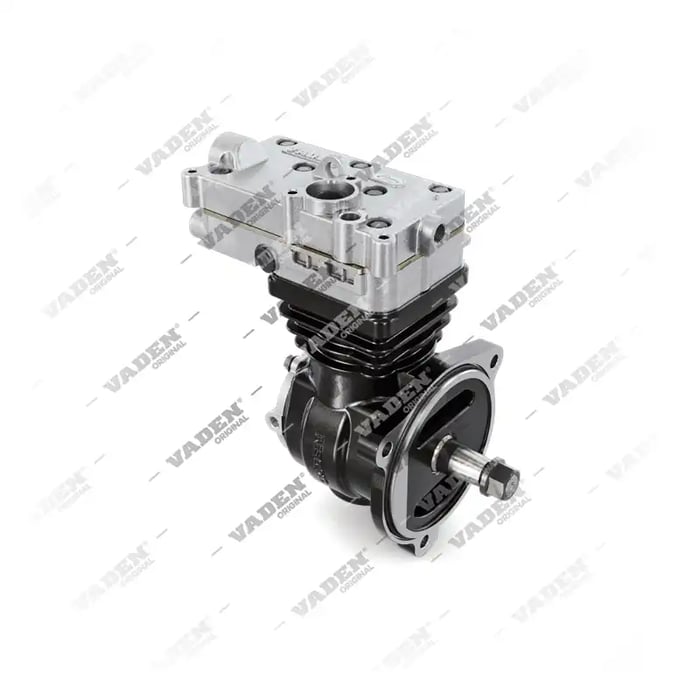
Need the part, not just the answer?
OE-grade air brake compressors and repair kits, manufactured and tested to commercial-vehicle standards.
Shop VADEN partsPublished by VADEN Original. Product links point to the manufacturer’s official catalogue. Specifications are general — always confirm figures against your vehicle’s service manual.