 airbrakecompressor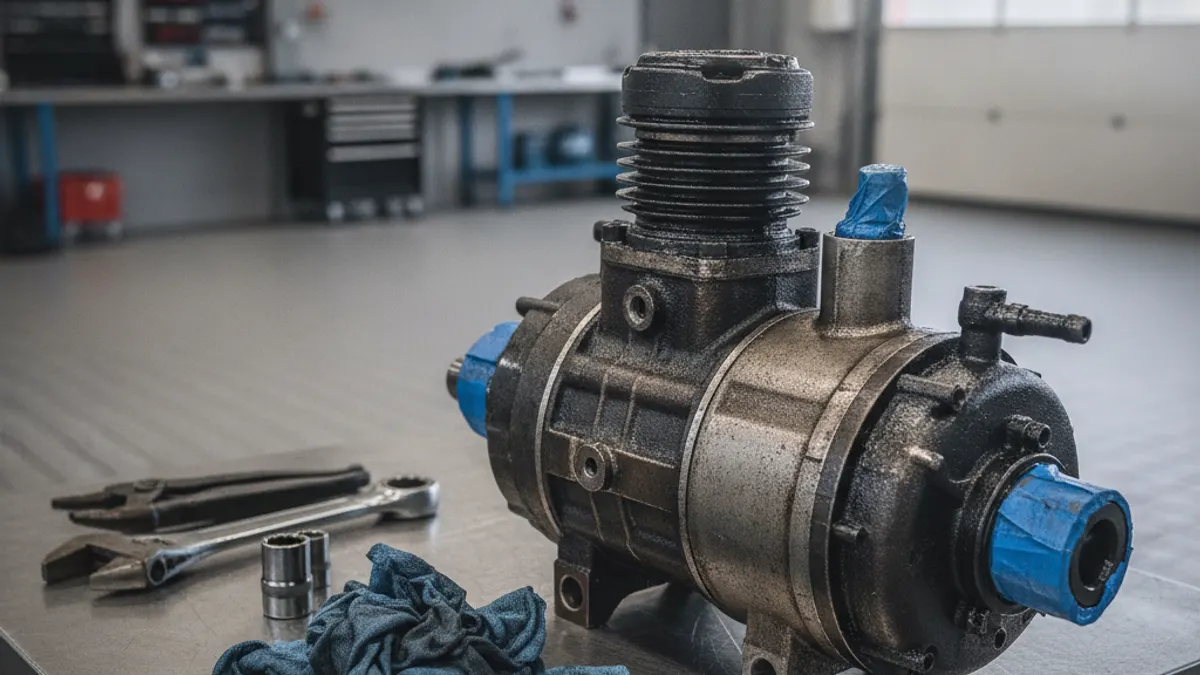
A failing air brake compressor announces itself in fairly predictable ways: air pressure builds slowly, the compressor cycles more often than it used to, oil starts showing up in the air system, and you may hear knocking or notice the air dryer popping off constantly. Any one of these on its own can have another cause, but two or three together almost always point back to a worn compressor. Below are the seven symptoms technicians rely on, and what each one is really telling you.
Quick reference: symptom and likely cause
| Symptom | What it usually means | Urgency |
|---|---|---|
| Slow air buildup | Worn rings/valves, or a system leak | High — affects braking |
| Excessive cycling | Reduced output or leaks bleeding air down | Medium to high |
| Oil passing into air | Worn rings, glazed bore, overheating | High — damages whole system |
| Knocking noise | Bearing or connecting-rod wear | High — near failure |
| Air dryer purging often | Compressor overworking or oil-fouled | Medium |
| Overheating | Continuous duty, restriction, low oil | High |
| Discharge line coking | Overheated oil carbonizing in the line | High |
1. Slow air pressure buildup
A healthy compressor should recover the system from governor cut-in (around 100-110 psi) back up to cut-out (typically 120-135 psi) quickly — the FMCSA benchmark for a dual system is roughly 85 to 100 psi within about 45 seconds at fast idle. If you are watching the gauges crawl, or it takes a minute-plus to reach a fully charged pressure near 120 psi, the compressor is not moving the air it should. Worn piston rings, a scored cylinder bore, or leaking discharge valves all bleed off compression on every stroke. Before condemning the compressor, rule out a system leak or a restricted air dryer — but persistent slow buildup with no external leak is a classic worn-compressor sign. See air brake compressor not building pressure for a full diagnostic walk-through.
2. Excessive cycling (loading and unloading too often)
The governor should load the compressor at cut-in and unload it at cut-out, then leave it alone for a good stretch while you use air. If you hear it loading up every couple of minutes with the truck sitting still, something is wrong. Either the compressor cannot keep the reservoirs topped up (low output), or air is leaking down faster than it should. Short-cycling wears the unloader mechanism, the governor, and the compressor itself. Check the governor and the unloader valve first, since a sticking governor can mimic this exactly — but a compressor that runs loaded far more than it rests is working too hard to compensate for lost capacity.
3. Oil passing into the air system (oil-fouled air)
This is the most damaging symptom on the list. When rings wear or the bore glazes, engine oil gets past the pistons and is pushed downstream with the compressed air. You will find oil at the air dryer purge, an oily film blowing out when you drain the wet tank, or slugs of oil in the lines and valves. A small amount of oil carryover is normal; heavy, continuous oil passing is not. It saturates the air dryer desiccant (killing its ability to remove moisture), gums up valves, and swells rubber seals throughout the brake system. Left alone, one oil-passing compressor can contaminate hundreds of dollars of downstream components. Our dedicated guide on an air brake compressor pumping oil covers the causes and confirmation steps in detail.
4. Knocking or rattling noise
A worn compressor often develops a rhythmic knock that speeds up and slows down with engine rpm — the sound of a tired connecting-rod bearing, wrist pin, or main bearing. It is easy to confuse with engine noise, so isolate it: the knock tracks compressor loading and often gets louder as the unit heats up. See our guide on air compressor knocking noise for a step-by-step way to separate it from ordinary engine sounds. A knocking compressor is usually close to the end of its life, and there is a real risk of a bearing letting go and sending debris downstream. Do not keep running a compressor that has started to knock.
5. Air dryer purging too frequently
The air dryer purges (a sharp hiss) each time the governor cuts out. If it is purging far more often than normal, the compressor is loading more often than it should — which ties back to slow buildup, leaks, or oil fouling. Excess oil also destroys the desiccant, so a compressor passing oil and an over-purging dryer often go hand in hand. If moisture is also getting through to the tanks, the dryer itself may be saturated and due for a cartridge change rather than the compressor being at fault.
6. Overheating
Compressors get hot in normal operation, but a unit that is too hot to hold your hand near, or that discolors the discharge fitting, is overworking. Causes include continuous-duty operation from a leak the compressor is chasing, a restricted discharge line, low or dirty engine oil starving the compressor's lubrication feed, or coolant-flow problems on liquid-cooled units. Overheating is a root cause of two other symptoms on this list: it cooks the oil that gets past the rings and accelerates bearing wear.
7. Discharge line coking (carbon buildup)
When a compressor runs hot and passes oil, that oil bakes onto the inside of the discharge line and forms hard carbon — "coking." It progressively chokes the discharge passage, which raises operating temperature further and starves the system of air, a self-feeding cycle. Technicians check for it by removing the discharge line and looking for black, brittle carbon deposits narrowing the bore. Heavy coking is a strong sign the compressor is passing oil and running too hot, and the line must be cleaned or replaced along with the compressor — otherwise the new unit inherits the restriction.
What to do when the symptoms add up
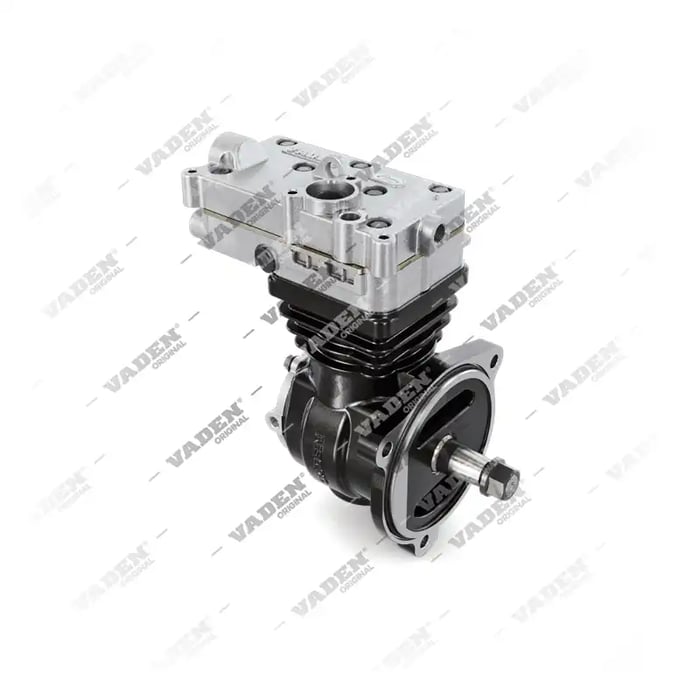
One symptom warrants a closer look; several together mean the compressor is on its way out. Work through the cheap, external causes first — governor operation, system leaks, air dryer condition — because any of them can imitate a bad compressor. Once you have confirmed the unit itself is worn (low output plus oil passing, or a knock, or coked discharge), it is replacement time. Depending on wear, a rebuild with OE-grade compressor repair kits can restore a serviceable core, while a compressor with bearing damage or a scored bore is better swapped for a new unit. When you do replace it, matching the original specification matters for duty cycle and mounting; you can browse VADEN's range of air brake compressors to find the correct fit. Whichever route you take, replace or thoroughly clean the discharge line and inspect the air dryer, since an oil-fouled system will contaminate a fresh compressor fast.
Rule of thumb: if the compressor is slow to build, passing oil, and the discharge line is coked, do not try to save it. Replace the unit, clean the discharge plumbing, and service the air dryer as one job.
For a step-by-step on the swap itself, see the air brake compressor replacement guide.
Need the part, not just the answer?
OE-grade air brake compressors and repair kits, manufactured and tested to commercial-vehicle standards.
Shop VADEN partsPublished by VADEN Original. Product links point to the manufacturer’s official catalogue. Specifications are general — always confirm figures against your vehicle’s service manual.