 airbrakecompressor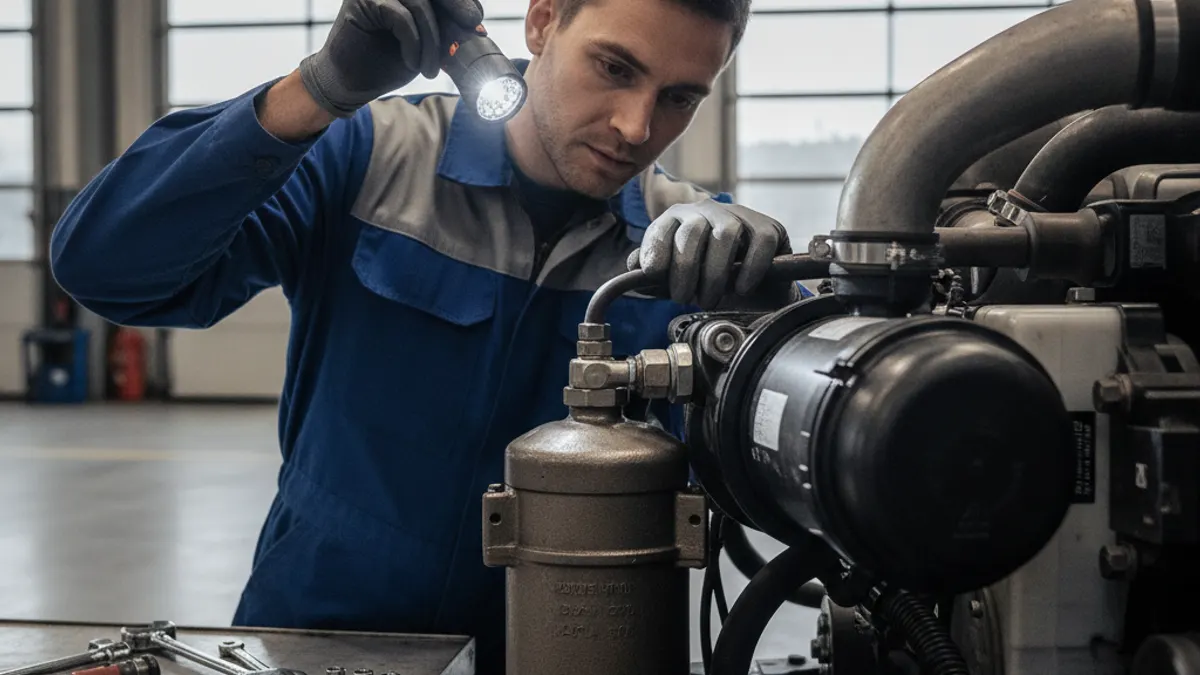
Air brake compressor maintenance is mostly about three things: keeping water out of the system, keeping the compressor cool, and keeping its oil clean. Do those consistently and an OE-grade compressor will run for hundreds of thousands of miles. Skip them and you invite oil passing, dryer failure, and a compressor that can't build pressure. The single most important habit is draining your air tanks — do that every day, service the air dryer on schedule, and manage heat, and you have covered the great majority of what actually kills these units.
Drain the air tanks — every day
The compressor pumps hot, moisture-laden air into your reservoirs. As that air cools, water condenses and pools in the bottom of each tank, carried along with a little oil mist that always sneaks past the piston rings. Left there, that water-and-oil sludge migrates into valves, freezes in winter, and corrodes the tanks from the inside.
- Manual drain valves: pull the lanyard or open the petcock on each reservoir at the end of every shift, with the system fully charged so the escaping air blows the water out. Drain until only clean air hisses.
- Automatic drain valves: a good upgrade, but they still need a periodic manual check — they clog and stick.
- What you see matters: a little moisture is normal. Milky or heavy oily discharge means your air dryer is saturated or the compressor is passing oil, and it is time to investigate.
Air brake compressor maintenance interval table
Intervals vary by engine make, duty cycle, and climate — always defer to your OEM service manual. The ranges below are typical starting points for a heavy commercial vehicle in mixed service.
| Task | Typical interval | Why it matters |
|---|---|---|
| Drain all air reservoirs | Daily / every trip | Removes condensed water and oil before it reaches valves |
| Check for audible air leaks & governor cycling | Weekly / pre-trip | Rising cycle frequency signals leaks or a worn compressor |
| Inspect discharge line & fittings for carbon and leaks | Every PM / ~10,000-25,000 mi | Carbon buildup traps heat and chokes airflow |
| Air dryer cartridge (desiccant) replacement | ~1 year or 100,000-150,000 mi | Saturated desiccant stops protecting the system |
| Verify coolant flow & oil supply/return lines to compressor | Every major PM | Prevents overheating and oil coking |
| Inspect compressor mounting, drive belt/gear, unloader operation | Every major PM | Catches vibration, wear, and unloader faults early |
| Compressor overhaul or replacement | By condition / high mileage | Restores efficient charging before total failure |
Keep the air dryer doing its job
The air dryer is the compressor's best friend — it strips moisture and oil from the discharge air before it reaches the tanks. A neglected dryer with a saturated desiccant cartridge stops absorbing water, and everything downstream suffers. Replace the cartridge on the interval above (sooner in humid climates or heavy stop-and-go duty), and check that the dryer's purge cycle actually vents — you should hear a short puff of air each time the governor cuts out. If you are seeing water in the tanks despite daily draining, the dryer is the first suspect. A deeper walkthrough lives in our guide to the truck air dryer.
Keep the compressor cool
Heat is what turns normal oil consumption into destructive oil passing. Most air brake compressors are lubricated and cooled by the engine's oil and coolant systems, so cooling neglect shows up fast:
- Discharge line: a restricted or carboned-up discharge line raises head temperature and lets oil carbon "coke" inside the compressor and line. Inspect the line for hard carbon deposits — if you can't blow through it freely, replace it. Keep the run as short and as free of low spots as the design allows.
- Coolant flow: make sure the coolant lines to a water-cooled compressor head are clear and flowing. A blocked coolant passage lets the head run far hotter than designed.
- Duty cycle: a compressor that runs loaded more than about a quarter of the time (from leaks or an undersized unit) never gets a chance to cool. Chase down air leaks so the compressor loads less often.
Prevent oil passing with clean oil and good lines
Some oil mist always carries over — that is normal. It becomes a problem when excess oil coats the dryer and fouls valves. To keep oil passing minimal:
- Change engine oil on time. The compressor draws from the same oil supply; dirty, sheared, or contaminated oil wears rings and bearings faster.
- Check the oil return line. A restricted or kinked return line lets oil pool in the compressor crankcase and get pumped past the rings. Verify it drains freely back to the engine.
- Don't overfeed the inlet. If the compressor draws air through the engine's induction system, a fouled air filter or oily turbo feed adds to the load.
If you're already chasing oily discharge, our dedicated write-up on a compressor pumping oil covers diagnosis in detail. When wear reaches the valve plate, rings, or gaskets, a rebuild with genuine air brake compressor repair kits restores sealing without replacing the whole unit — provided the bore and bearings are still within spec.
Inspection schedule and warning signs
Build a short compressor check into every preventive maintenance visit. Watch for the early symptoms that mean wear is accelerating:
- Longer build-up time. If it takes noticeably longer to charge from cut-in (~100-110 psi) to cut-out (~120-135 psi), efficiency is dropping.
- The governor cycles more often. Frequent loading points to leaks or a tired compressor.
- Knocking or excessive vibration. Check mounting bolts and the drive before it worsens.
- Oil at the dryer purge or in the tanks. A sign of ring or seal wear.
- The low-air warning trips in normal driving. The dash light and buzzer come on around 60 psi; if they activate while you're rolling, the compressor is falling behind and needs immediate attention.
These overlap heavily with the broader symptoms of a failing air brake compressor. When a unit has aged past economical repair — worn bore, scored crankshaft, chronic overheating — the right move is a fresh OE-grade air compressor rather than another patch. Good maintenance is what postpones that day for as long as possible.
Bottom line: drain daily, service the dryer, keep it cool, and keep the oil clean. A compressor that is protected from water and heat rarely fails early — it wears out honestly, at high mileage, and gives you plenty of warning.
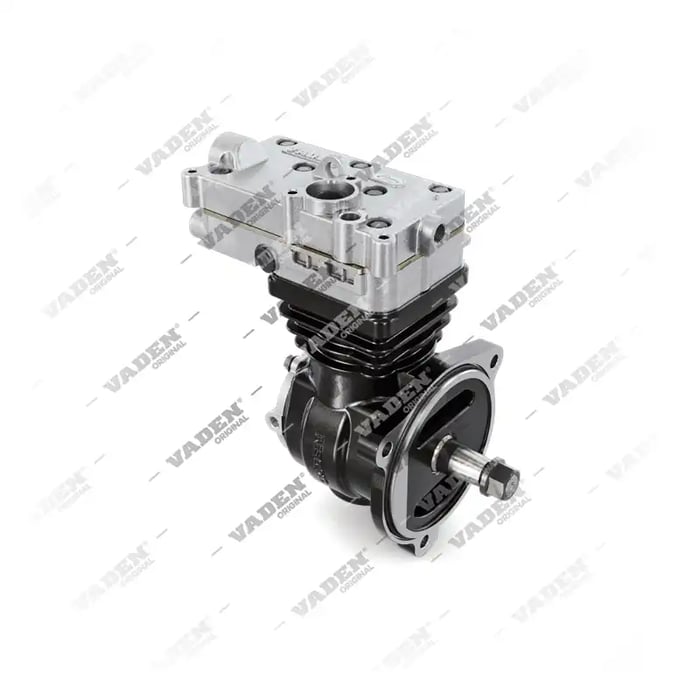
Need the part, not just the answer?
OE-grade air brake compressors and repair kits, manufactured and tested to commercial-vehicle standards.
Shop VADEN partsPublished by VADEN Original. Product links point to the manufacturer’s official catalogue. Specifications are general — always confirm figures against your vehicle’s service manual.