 airbrakecompressor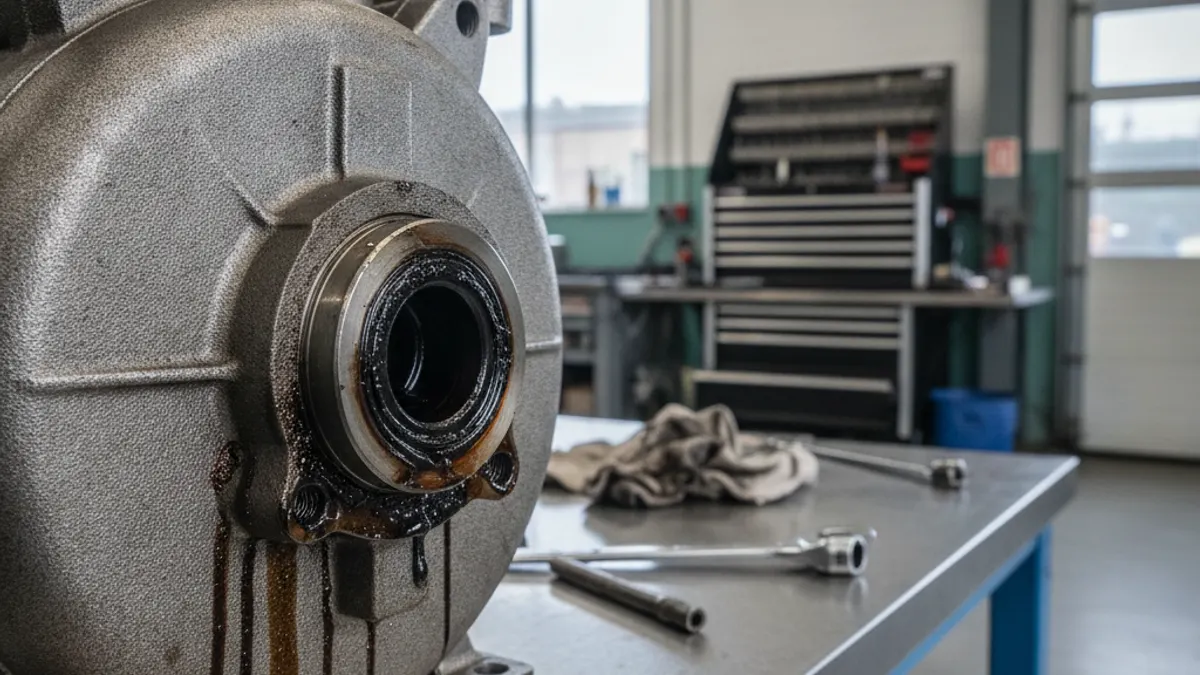
An air brake compressor pumps oil into the system when engine oil that lubricates the compressor is allowed to carry past the piston rings and out the discharge port instead of draining back to the crankcase. Every reciprocating compressor passes a tiny film of oil — that is normal. The problem is excessive oil: puddles when you drain the tanks, an oil-soaked air dryer, or oily film blowing out the discharge line. That points to worn rings, overheating and carbon buildup, a restricted discharge line, or an over-fed crankcase — and it needs to be corrected before the oil wrecks the components downstream.
Normal oil carryover vs. a real problem
Because the compressor is lubricated by pressurized engine oil, a small amount of oil vapor always makes it past the rings — this is why the air dryer and, on some vehicles, an oil/coalescing filter exist. You have a genuine oil-passing problem when you see:
- Oil draining out of the air tanks (more than a light misting) when you pull the drain valves.
- An air dryer cartridge that is saturated, or a burst of oily mist from the dryer purge.
- Oil weeping from fittings, or oil visible inside the discharge line and delivery ports.
- Frequent, unexplained failures of valves that should not wear out — relay valves, foot valve, height control.
Why an air brake compressor passes oil
There is rarely just one cause. Overheating and high duty cycle feed each other, and a coked discharge line makes worn rings pass even more oil. Work through the common sources below.
| Cause | What is happening | Typical sign |
|---|---|---|
| Worn piston rings / cylinder | Blow-by past worn rings carries oil up into the discharge instead of sealing it below. | Oil in tanks, high crankcase blow-by, often high mileage. |
| Overheating & coking | Discharge temps too high bake the oil into hard carbon in the head and discharge line. | Very hot discharge line, black carbon flakes, restricted flow. |
| Restricted discharge line | Carbon or a kinked/low-lying line raises back pressure, forcing oil past the rings. | Slow charging, heavy carbon at the head, hot line. |
| Excessive duty cycle | System leaks make the compressor run more than ~25% of the time, so it runs hot. | Compressor rarely unloads, governor cycles constantly. |
| Over-feeding the crankcase | Too much oil supply, a restricted oil return, or a high engine oil level floods the compressor. | Oil passing on an otherwise healthy compressor, wet crankcase. |
| Restricted air intake | A plugged intake filter increases vacuum in the cylinder and pulls oil up past the rings. | Dirty/clogged compressor intake filter or engine air cleaner. |
The single most common root cause on a fleet truck is duty cycle. A healthy system should keep the compressor loaded — actually building air — well under a quarter of the time. The governor loads and unloads it between cut-in (roughly 100-110 psi) and cut-out (roughly 120-135 psi); if it is cycling almost constantly and the system never quite catches up, air is leaking faster than the compressor should have to work. Chase down those leaks — glad hands, fittings, chambers, lines, and a leaking unloader valve — before you condemn the compressor, because a leaking system will cook a brand-new unit into passing oil too. Start with why the air brake system loses pressure.
The other cheap cause worth clearing before anything comes apart is the drain-back path. The compressor is fed pressurized oil from the engine and returns it through a line that has to run continuously downhill and stay clear end to end. If that return line is kinked, sludged, or mounted so the oil cannot gravity-drain, the crankcase floods and oil is forced up past rings that are otherwise perfectly healthy. An intake filter that is restricted or already oil-soaked — or an intake drawing from a fouled engine breather — does the same thing from the other direction. These are inspection-only checks, and they are routinely skipped on the way to condemning a pump that was never worn out.
What oil passing damages downstream
Oil is not a cosmetic issue — it migrates through the whole pneumatic circuit and takes out components far from the compressor:
- Air dryer: oil coats and saturates the desiccant, destroying its ability to strip moisture. Once oil-fouled, the dryer no longer protects anything downstream. See how the truck air dryer works.
- Valves: oil swells rubber seals and O-rings, and combined with moisture it forms sludge that makes relay, quick-release, foot, and control valves stick or leak.
- Air lines and tanks: oil pools in the low points of nylon lines and in the reservoirs, degrading the tubing and providing a reservoir of contamination that re-fouls new parts.
- Braking reliability: sticky valves mean slow apply or release, dragging brakes, or uneven timing — a safety problem, not just a maintenance one.
How to diagnose it
Start from what you are actually looking at. The symptom usually narrows the cause before you pick up a tool, and it tells you how far through the system the oil has already traveled.
| What you see | Most likely cause |
|---|---|
| Oil sludge or a black slug of oil at the wet-tank drain | Compressor passing oil; check rings, duty cycle, and oil return |
| Dryer purges oily mist; cartridge black and heavy | Carryover saturating the desiccant — the dryer is no longer removing water |
| Oil at valve exhaust ports or in the brake chambers | Heavy carryover has reached the secondary circuit; the system is contaminated |
| Blue haze or oil at the compressor intake or discharge | Worn bore, restricted return, or a plugged intake filter |
| Compressor runs constantly and is slow to reach cut-out | A system leak driving duty cycle up; overwork first, oil passing second |
Then work from the outside in, and do not pull the compressor until the cheap items have been cleared:
- Confirm the source. Drain the wet tank and look at what comes out. Heavy oil confirms carryover; mostly water points to a dead air dryer instead. Work downstream tank by tank so you know how far the oil has spread.
- Inspect the discharge line. Disconnect it at the compressor and check for carbon buildup and restriction. Hard black coke means the line has been running too hot and should be replaced, not just cleaned.
- Check duty cycle and leaks. Build the system to governor cut-out, then shut the engine off with the brakes released and time the pressure drop. A system that bleeds down fast is overworking the compressor and has to be sealed before anything else.
- Check the intake and oil feed. Confirm a clean intake filter, correct engine oil level, and an unrestricted oil return line that drains continuously downhill.
- Assess wear. Inspect the discharge port and head for carbon buildup and check the bore for scoring and taper. Persistent oil passing with a clean intake, a good return line, and a leak-free system points squarely at the compressor's own sealing surfaces — the rings and cylinder are worn out.
How to fix it — and clean up downstream
Repairing the compressor is only half the job. If you replace the unit but leave the oil-soaked dryer, tanks, and lines in place, the contamination migrates back and you'll be chasing valve failures for months.
1. Correct the source. If the discharge line is coked, replace it and route it to shed heat with no low spots that trap oil. Fix the air leaks driving a high duty cycle. If the compressor itself is worn, rebuild it with OE-grade air brake compressor repair kits (rings, gaskets, valve plates, and seals) when the bore is still in spec, or install a new OE-grade compressor when the cylinder is worn beyond limits.
Where the compressor is the confirmed culprit, the choice between a kit and a new air brake compressor comes down to the condition of the bore and crankcase:
| Condition | Recommended path |
|---|---|
| Bore in spec, sound crankcase, worn rings, gaskets, or valve plate | Rebuild with a repair kit |
| Light carbon in the head, worn unloader, seals leaking | Rebuild — head and unloader components are in the kit |
| Scored or oval bore, cracked casting, seized | Replace the compressor |
| Unknown history, high mileage, downtime-critical fleet | Often replace for reliability; keep the old core |
2. Decontaminate everything downstream:
| Component | Action |
|---|---|
| Discharge line | Replace if coked; a carbon-restricted line will re-oil the new compressor. |
| Air dryer | Replace the cartridge — oil-fouled desiccant cannot be cleaned or recovered. |
| Air tanks / reservoirs | Drain fully, and remove and flush if oil has pooled. |
| Nylon air lines | Purge; replace any line holding standing oil, especially at low points. |
| Valves | Inspect relay, foot, and control valves; replace any that are gummed, swollen, or sticking. |
Rule of thumb: if you can see oil in the tanks, assume the air dryer cartridge is done. Replacing the compressor without replacing the dryer is the most common reason the "fixed" truck comes right back.
Preventing repeat oil passing
Keep the compressor cool and lightly loaded and it will pass almost no oil for its full service life. Service the intake filter, keep engine oil at the correct level, verify the oil-return line still drains freely, fix air leaks promptly to hold duty cycle down, and change the air dryer cartridge on schedule so it's protecting the system rather than storing contamination. Building this into routine service — see air brake compressor maintenance — is far cheaper than a downstream valve-by-valve cleanup.
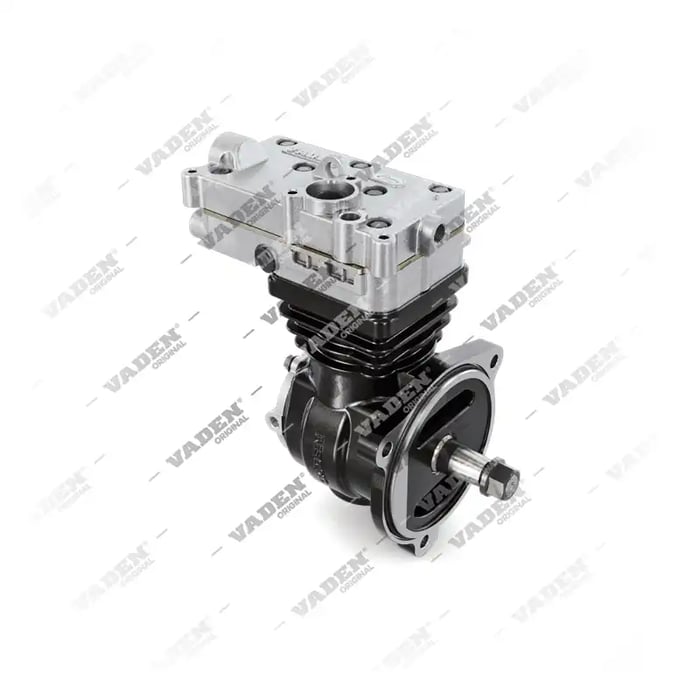
Need the part, not just the answer?
OE-grade air brake compressors and repair kits, manufactured and tested to commercial-vehicle standards.
Shop VADEN partsPublished by VADEN Original. Product links point to the manufacturer’s official catalogue. Specifications are general — always confirm figures against your vehicle’s service manual.