 airbrakecompressor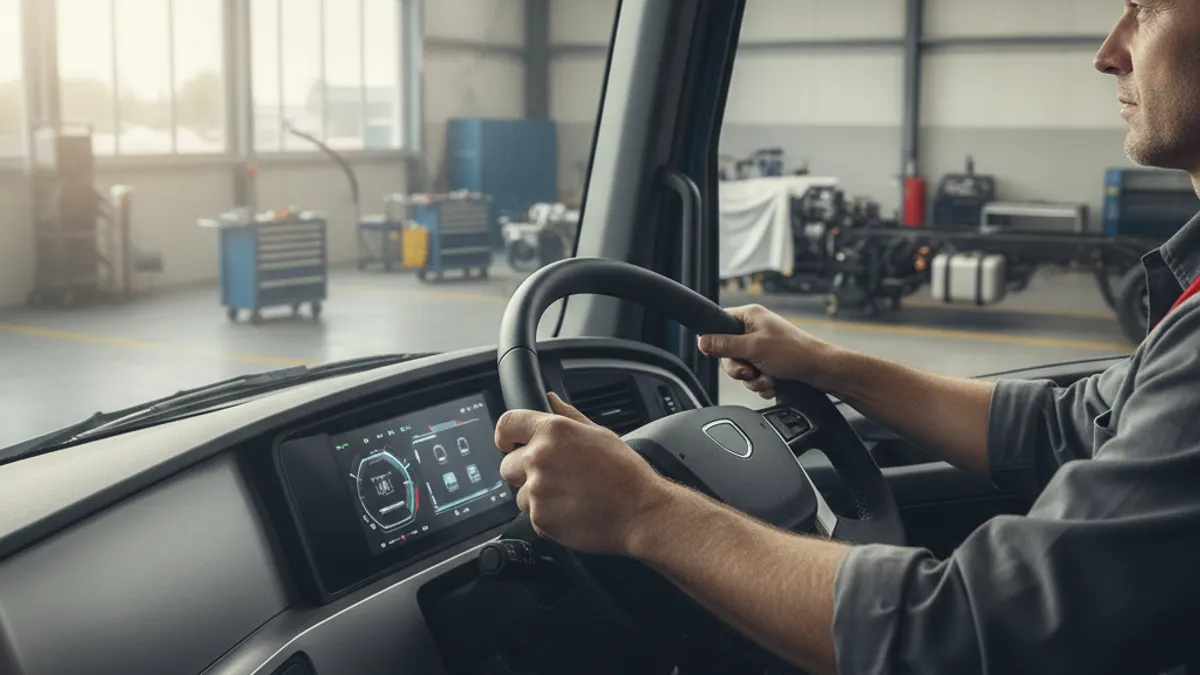
If you are looking for an "air brake endorsement," here is the short answer: in the United States there is no such endorsement. The federal CDL system treats air brakes as a restriction, not an endorsement. If you do not demonstrate air brake competence, your license is stamped with an air brake restriction (commonly the "L" restriction) that legally bars you from operating any commercial vehicle equipped with air brakes. You remove that restriction by passing the air brake knowledge test and taking your driving skills test in a vehicle that has air brakes.
Endorsement vs. restriction: why the wording matters
People search "do you need an air brake endorsement" because the term gets used loosely at truck stops and in casual conversation. Legally, though, endorsements and restrictions work in opposite directions:
- An endorsement adds a privilege. Passing the tanker (N), HazMat (H), doubles/triples (T), passenger (P), or school bus (S) exams grants you the right to haul or carry something extra.
- A restriction removes a privilege. The air brake restriction says you are not allowed to drive air-brake vehicles until you prove you can.
So nobody "adds" air brakes to a license. Instead, a new CDL holder starts out restricted, and clears the restriction by passing the right tests. Get that distinction right and the rest of the process makes sense.
What the air brake restriction actually covers
Under federal rule (49 CFR 383.95), a state must place the air brake restriction on your CDL if you either fail the air brake knowledge test or take your skills test in a vehicle not equipped with air brakes. Important detail many drivers miss: the restriction covers full air brake systems and air-over-hydraulic systems. If your license carries the restriction, you cannot legally get behind the wheel of a commercial truck, bus, or tractor-trailer that uses either.
This is why the restriction is a real career limiter. The vast majority of Class 8 trucks, transit buses, and combination rigs run on full air brake systems. A CDL with an active air brake restriction is close to unusable for over-the-road freight work.
Do you need to clear the restriction?
Ask what you plan to drive:
- Yes, clear it if you will operate tractor-trailers, straight trucks over about 26,000 lb GVWR, or buses - virtually all of which have air brakes.
- Maybe not if you only ever drive lighter commercial vehicles with hydraulic brakes. But most employers want the restriction gone regardless, because it limits which trucks they can assign you.
How to clear (or avoid) the air brake restriction
The process is the same whether you are getting a new CDL or removing an existing restriction:
- Study the air brake section of your state CDL manual. It covers system components, dual air brake systems, inspection, and safe use.
- Pass the air brake knowledge (written) test. This is a separate module from the general knowledge test.
- Identify the components during the pre-trip vehicle inspection - compressor, governor, reservoirs, air dryer, low-air warning, spring brakes, and gauges.
- Perform the in-cab air brake check as part of the skills test (details below).
- Take your road skills test in a vehicle equipped with air brakes. This is non-negotiable: testing in a hydraulic-brake vehicle forces the restriction onto your license.
- Visit your state DMV to update the license. If you already hold a CDL with the restriction, you retake the knowledge and/or skills test on an air-brake vehicle, then pay the applicable state fee.
One practical note: the federal Entry-Level Driver Training (ELDT) requirement applies to first-time CDLs, class upgrades, and the H, P, and S endorsements. Removing an air brake restriction on its own is not on the ELDT list, so you generally will not need a registered training provider just to clear it - your state's retest process governs. Always confirm with your local DMV, since procedures and fees vary by state.
What the air brake test checks
The examiner wants to see that you can verify the system is safe before rolling. Memorize these checkpoints; they are also the same checks a good technician runs. The exact figures vary by vehicle, so know the ranges rather than one magic number - our full CDL air brake test guide and the page on fully charged system pressure go deeper.
| Check | What you demonstrate | Typical value |
|---|---|---|
| Governor cut-out / cut-in | Compressor stops and restarts loading the tank | Cut-out ~120-135 psi; cut-in ~100-110 psi |
| Pressure build-up rate | System recovers air quickly at operating RPM | ~85 to 100 psi within ~45 seconds (dual system) |
| Leakage test (static & applied) | System holds air with engine off | Loss under ~2-3 psi/min (single); ~3-4 psi/min (combination) |
| Low-air warning | Buzzer/light activates as pressure drops | Comes on before ~60 psi |
| Spring (parking) brakes apply | Brakes set automatically at low pressure | ~20-45 psi |
The governor cut-in/cut-out step trips up a lot of first-timers because they do not know what a healthy governor should do. If that is you, read up on how the compressor governor works before test day.
Your test vehicle has to be healthy, too
You can know every step and still fail if the truck itself won't cooperate. If your practice or test vehicle can't build pressure to the cut-out range, bleeds air faster than the allowable leakage rate, or trips the low-air warning early, the underlying fault is almost always hardware - a tired compressor, a leaking governor or unloader, a saturated air dryer, or worn reservoir fittings. Those parts wear out, and on a test day they are the difference between passing and a wasted appointment. When a system needs bringing back to spec, work from a full range of genuine air brake system parts rather than guessing with mismatched components. A truck that holds air cleanly makes the whole air brake check straightforward.
Bottom line
There is no air brake endorsement to chase. There is an air brake restriction to avoid or remove. Study the air brake material, pass the knowledge test, learn the in-cab check cold, and make sure your skills test is done on an air-brake vehicle. Do that and your CDL will carry no air brake restriction - which is exactly what employers running air-braked trucks and buses want to see.
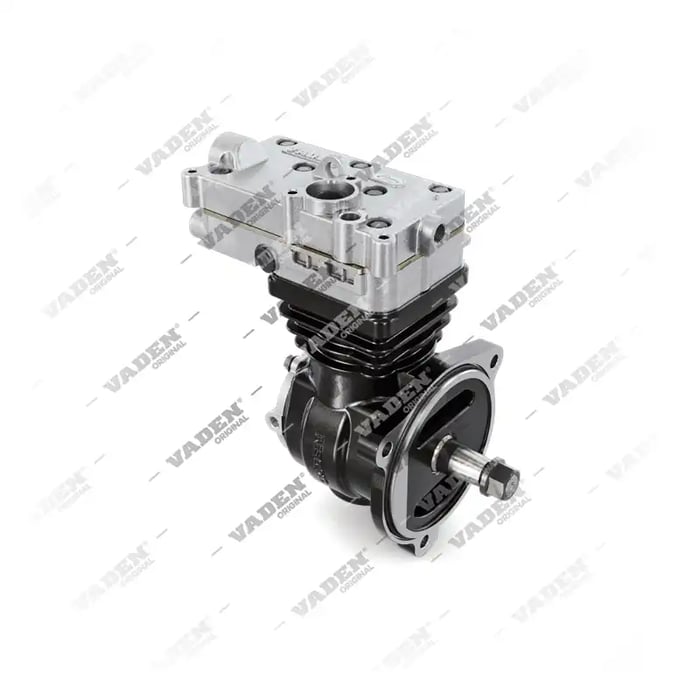
Need the part, not just the answer?
OE-grade air brake compressors and repair kits, manufactured and tested to commercial-vehicle standards.
Shop VADEN partsPublished by VADEN Original. Product links point to the manufacturer’s official catalogue. Specifications are general — always confirm figures against your vehicle’s service manual.