 airbrakecompressor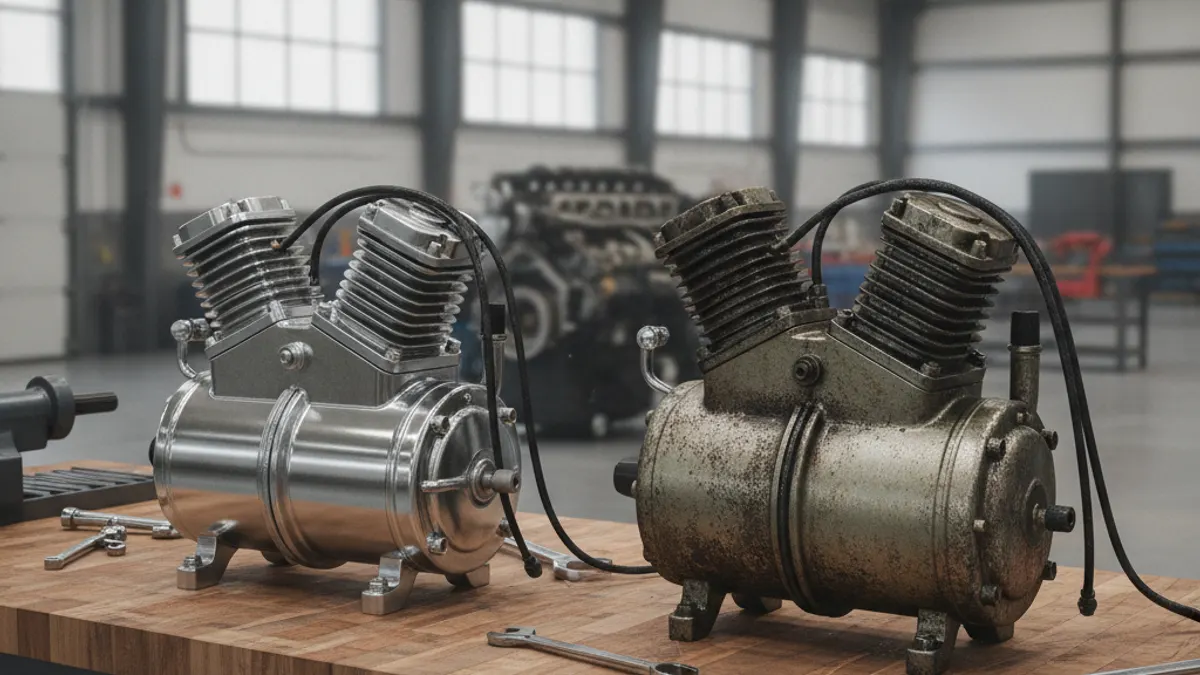
When you're buying an air compressor for a truck, the real decision isn't brand loyalty — it's OE-grade quality versus cheap aftermarket. An OE-grade compressor is built to the tolerances, materials, and testing standards the vehicle manufacturer specified; a low-cost aftermarket copy looks the same on the shelf but often cuts corners you can't see. The right call depends on your duty cycle and how long you plan to keep the truck, but for most fleet and owner-operator applications, an OE-quality unit is the cheaper part to own, even when it costs more to buy.
The air compressor is the heart of the air brake system: an engine-driven pump that keeps the reservoirs charged so the brakes always have air to work with. A governor cuts the compressor out once system pressure reaches roughly 120–135 psi and cuts it back in around 100–110 psi, holding a fully charged system near 120 psi. When the compressor wears out, your brakes are the first thing affected — which is why this buying decision deserves more thought than "which one is cheapest today."
OE-grade vs cheap aftermarket: what actually differs
Two compressors can share the same photo and the same part number in a listing, yet be built to completely different standards. Here's where the money goes — or doesn't:
| Factor | OE-grade compressor | Cheap aftermarket |
|---|---|---|
| Cylinder head & block casting | Clean, dense castings with controlled porosity; consistent wall thickness | Porous or uneven castings that can crack under heat/pressure cycling |
| Machined tolerances | Tight bore, deck, and bearing tolerances for proper sealing and oil control | Loose tolerances that promote blow-by, oil pumping, and early wear |
| Valves, rings & seals | Heat- and oil-resistant materials rated for continuous duty | Lower-grade elastomers and reed valves that harden or fail early |
| End-of-line testing | Every unit pressure-tested and leak-checked before shipping | Batch-sampled at best; some units never tested individually |
| Fitment & port accuracy | Correct mounting, drive, and port geometry for a true bolt-on | "Close enough" fitment that leaks or stresses the mount |
| Warranty & support | Meaningful warranty backed by a traceable manufacturer | Token warranty that's slow or impossible to claim |
None of these are visible when the part is boxed. That's the trap: the failure modes of a cheap compressor — pumping oil into the air system, failing to build pressure, or knocking within months — show up after it's installed and paid for.
What to check before you buy
Whether you're sourcing OE, OE-grade, or reman, run through this checklist before you pay:
- Exact fitment. Match the part number, mounting flange, drive type (gear, spline, or belt), gear/coupling, and port layout to your engine and model year. A compressor that "almost" fits will leak at the ports or vibrate the bracket loose.
- Displacement and duty cycle. Make sure the unit's air delivery matches the vehicle — a compressor sized for a light truck will run constantly on a heavy tractor, overheat, and pump oil. If you're weighing a bigger pump, compare single vs. twin-cylinder designs before you decide.
- Casting and machining quality. Look for clean, evenly finished sealing surfaces and no visible porosity. Slop in the crank or a rough deck is a red flag.
- Testing evidence. Ask whether every unit is individually pressure- and leak-tested. Serious manufacturers test 100% of output, not a sample.
- Warranty terms. Read the length and the claim process. A strong warranty signals the maker expects the part to last; a vague one signals the opposite.
- Manufacturer traceability. A real factory with production history behind it is a better bet than an unbranded box. As a reference point, VADEN has passed a million compressors off its line under OE-grade manufacturing — that kind of volume and process control is exactly what separates a consistent part from a gamble.
Total cost of ownership, not sticker price
A compressor is a labor-heavy job. Once you factor in the hours to remove and reinstall it, the sticker price becomes a small part of the picture — and a cheap unit that fails early means you pay that labor twice.
| Cost element | OE-grade | Cheap aftermarket |
|---|---|---|
| Purchase price | Higher | Lower |
| Labor to install | Same either way | Same either way |
| Expected service life | Long, matched to OE intervals | Often much shorter |
| Oil carryover risk | Low — protects the air dryer and valves | Higher — fouls dryer, contaminates system |
| Downtime / repeat repair | Rare | Common — labor paid twice |
| True 5-year cost | Usually lower | Frequently higher |
The hidden line in that table is oil carryover. A poorly machined compressor pumps oil downstream, which shortens air dryer cartridge life and gums up valves — turning a compressor problem into a system-wide one. For a full breakdown of parts-plus-labor pricing, see our compressor replacement cost guide.
When is aftermarket the right call?
"Aftermarket" isn't a dirty word — it just spans a huge quality range. A high-quality aftermarket manufacturer building to OE-grade standards can equal or beat the dealer part at a better price. The distinction that matters is OE-grade vs. bargain-bin, not OE vs. aftermarket. Aftermarket makes clear sense when:
- You want OE quality without dealer markup, from a maker with real testing and a traceable warranty.
- The truck is out of warranty and you're free to source your own parts.
- You need broad coverage across mixed fleets and want one trusted supplier.
Where it goes wrong is chasing the lowest possible price on an unbranded unit with no testing evidence and no support. On a safety-critical air brake part, that's a false economy.
Where to buy a quality truck compressor
Once you've confirmed fitment and duty cycle, source the part from a manufacturer that tests every unit and can trace it. VADEN's range of OE-grade air brake compressors is built and pressure-tested to the standards above and cataloged by application, which takes the guesswork out of matching the right unit to your engine. When you order, cross-check the part number against your old compressor and confirm the drive and ports before the truck goes on the lift — the practical steps are covered in our air brake compressor replacement guide.
Bottom line: buy the compressor that's cheapest to own, not cheapest to buy. On an air brake system, quality and correct fitment aren't a luxury — they're the price of not doing the job twice.
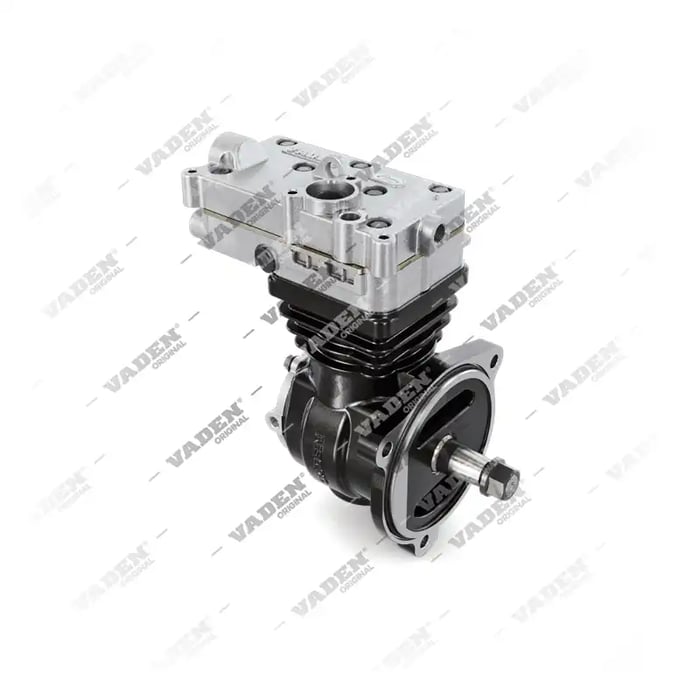
Need the part, not just the answer?
OE-grade air brake compressors and repair kits, manufactured and tested to commercial-vehicle standards.
Shop VADEN partsPublished by VADEN Original. Product links point to the manufacturer’s official catalogue. Specifications are general — always confirm figures against your vehicle’s service manual.