 airbrakecompressor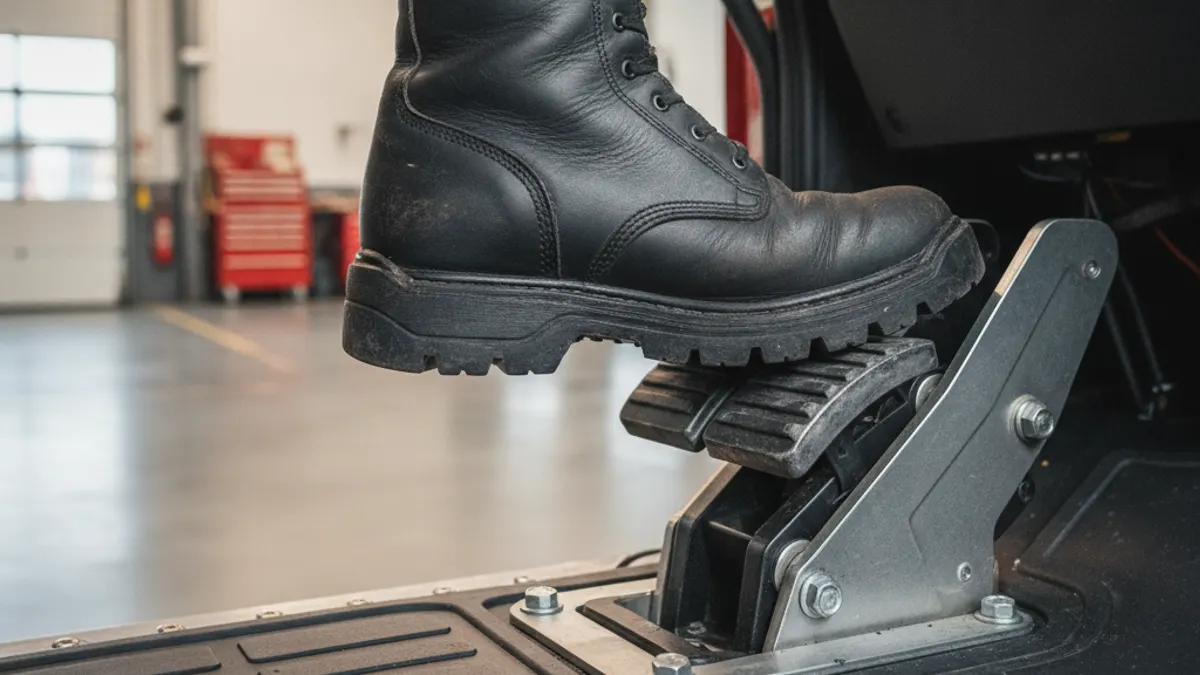
A short hiss of air when you press or release the brake pedal on a truck is normal. That sound is the foot valve — the treadle valve under the pedal — metering compressed air out to the brake chambers and then exhausting it when you let off. What is not normal is a hiss that keeps going after you settle the pedal, or a hiss loud enough to drag your dash air-pressure gauge down. That points to an air leak. This page shows you how to tell the two apart and how to track a leak down.
Is air noise when pressing the brake pedal normal?
On a heavy vehicle with full air brakes, yes — a quick burst of air is expected every time the pedal moves. Pressing the treadle sends air to the service brake chambers; releasing it opens an exhaust port so that air can dump fast and let the brakes off. You hear both events. A healthy system makes a crisp pssht on apply and a slightly longer whoosh on release, then goes quiet.
The trouble sign is duration and pressure. A hiss that continues while your foot is steady on the pedal, or one that persists with the pedal fully released, is escaping air the system did not intend to vent.
Normal vs. abnormal air sounds
| Sound | When it happens | Normal? | What it means |
|---|---|---|---|
| Short hiss on apply | The instant you press the pedal | Yes | Foot valve delivering air to the brake chambers |
| Longer whoosh on release | When you lift off the pedal | Yes | Service air exhausting so the brakes let go |
| Pop/hiss from the dash or under-cab | Air building to cut-out (~120-135 psi) | Yes | Governor unloading the compressor |
| Continuous hiss, pedal held down | Steady, does not fade | No | Leak in the service line, foot valve, or a brake chamber |
| Hiss with pedal released, engine off | Ongoing after parking | No | Supply-side leak; gauge will drop |
| Gauge falling faster than normal | Any time | No | Leak rate exceeding the allowable limit |
What actually makes the hiss when you press the pedal
The foot valve is a balanced, self-lapping valve. Push it down and it opens a passage from the supply tanks to the front and rear service circuits, delivering air in proportion to how hard you press. Let off and it closes that passage and opens an exhaust vent so the chambers can breathe out. Because heavy trucks run a dual air brake system — two separate circuits fed from separate tanks — you may hear air move on both apply and release. All of that is the system doing its job. For the bigger picture on how the air gets there in the first place, see how air brake systems work.
When the hiss signals a leak
Treat the sound as a leak when any of these are true:
- The hiss does not stop after the pedal settles.
- Your air pressure gauge drops steadily with the engine off.
- The compressor cycles far more often than it used to (short-cycling to keep pressure up).
- The low-air warning buzzer or light comes on during normal driving, near ~60 psi.
Common leak points on a truck air system include the foot valve exhaust port, brake chamber diaphragms, relay and quick-release valves, air line fittings, the glad-hand couplers between tractor and trailer, and the air dryer purge valve. A worn diaphragm or a tired valve seat is a routine wear item, not a catastrophe — but it does need attention, because a leak that outruns the compressor will eventually park the truck on its spring brakes. If you are chasing a drop you can hear but can't yet see, our companion guide on an air brake system losing pressure walks through the full diagnostic tree.
How to find the leak
Work through it methodically. You want to know whether the leak is on the supply side, the service (applied) side, or at a specific chamber.
- Charge and chock. Build the system to full pressure (~120 psi), then shut the engine off and chock the wheels. Do not rely on the brakes you are about to test.
- Static test (foot off). With the pedal released, listen. Any hiss now is a supply-side or parking-circuit leak. Watch the gauge — a straight truck should typically lose no more than about 2 psi per minute with brakes released (roughly 3 psi/min for a combination). Confirm current limits against your CDL manual.
- Applied test (foot down, held). Have a helper press and hold the pedal at a firm, steady application. A leak that appears or grows now is in the service delivery circuit — foot valve, relay valve, service lines, or a chamber. Allowable applied leakage is typically around 3 psi/min for a straight truck (about 4 psi/min combination).
- Spray to pinpoint. With the suspect circuit pressurized, brush or spray soapy water on fittings, chamber clamps, and valve exhaust ports. Growing bubbles mark the spot.
- Isolate front vs. rear. Because the circuits are split, note which axle group hisses to narrow the search to one relay valve or one run of line.
Truck air brakes vs. a car's brake booster hiss
Drivers coming from light vehicles sometimes assume the pedal hiss is the same thing they heard in a car. It is not. A passenger car uses hydraulic brakes with a vacuum booster; the faint hiss there is air bleeding through the booster diaphragm or check valve, and it has nothing to do with a compressor. A heavy truck uses compressed air as the working fluid all the way to the brakes. So on a truck, the sound you hear is real system air — which is exactly why a persistent hiss matters here in a way it might not on a car. Do not think in terms of "bleeding the lines" like a hydraulic system; air brakes are diagnosed by pressure and leak-down, not by bleeding.
When to fix it — and why not to wait
Know your pressure landmarks. A fully charged system sits near 120 psi. The low-air warning trips around 60 psi. If pressure keeps falling, the spring (parking) brakes apply automatically somewhere around 20-45 psi — potentially while you are still rolling. A slow leak that the compressor easily replaces might be a scheduled repair; a leak that the compressor cannot keep up with is an out-of-service condition. When it comes time to replace the leaking valve, chamber, or line, use OE-grade components — VADEN's air brake system parts and repair kits are built to the tolerances these pneumatic circuits depend on, so the repair seals and stays sealed.
If the noise you are tracking is a rhythmic knock rather than a hiss, that is a different fault — see air compressor knocking noise instead. But for a hiss tied to the brake pedal, run the static and applied tests above, find the escaping air, and fix the source before it grounds the truck.
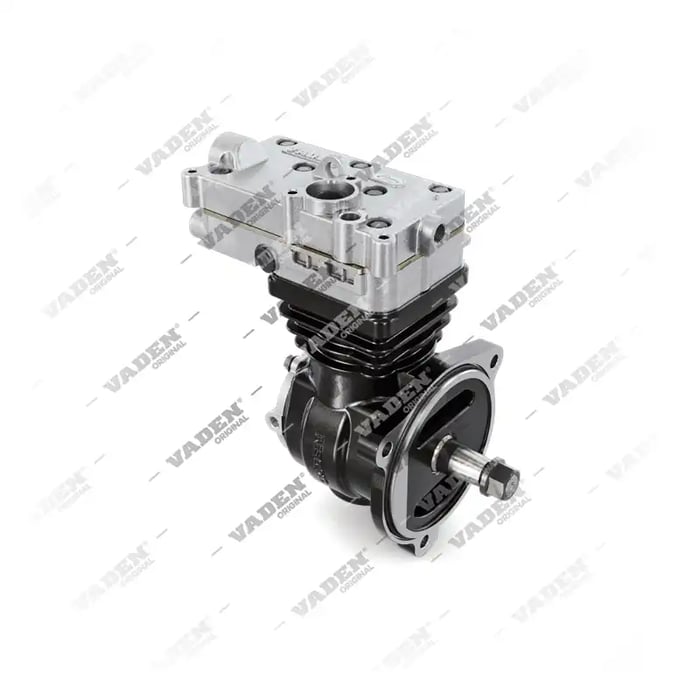
Need the part, not just the answer?
OE-grade air brake compressors and repair kits, manufactured and tested to commercial-vehicle standards.
Shop VADEN partsPublished by VADEN Original. Product links point to the manufacturer’s official catalogue. Specifications are general — always confirm figures against your vehicle’s service manual.